> For the complete documentation index, see [llms.txt](https://osif.laet4x.com/llms.txt). Markdown versions of documentation pages are available by appending `.md` to page URLs; this page is available as [Markdown](https://osif.laet4x.com/contribution.md).
# 📖 Contribution
### Contribution Guidelines
There are many ways to contribute to the OSIF project. This overview summarizes the most important steps to get you started as a contributor.
* Report bugs to the OSIF issue tracker.
* Make suggestions for changes, updates, or new features to the OSIF issue tracker.
* Contribute bug fixes, example code, documentation, or tutorials to OSIF.
* Contribute new features to OSIF.
### Contribute new modules
* *Fork it!*
* *Create your feature/module branch: **git checkout -b my-new-module***
* *Commit your changes: **git commit -am 'Add some module'***
* *Push to the branch: **git push origin my-new-module***
* *Submit a pull request*
### Module
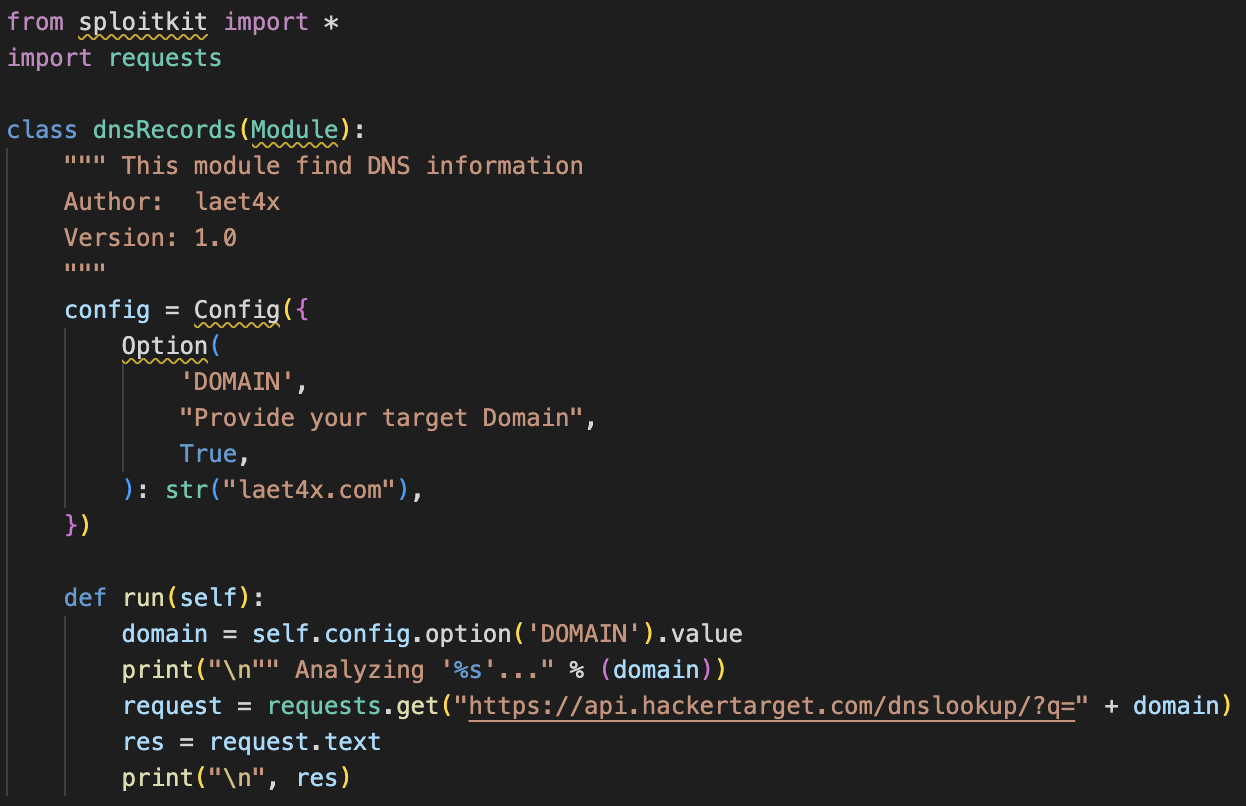
Modules python code must be place inside **modules -> sub-folder**
module structure
This example shows an example of a module for OSIF aimed to find the DNS Records